
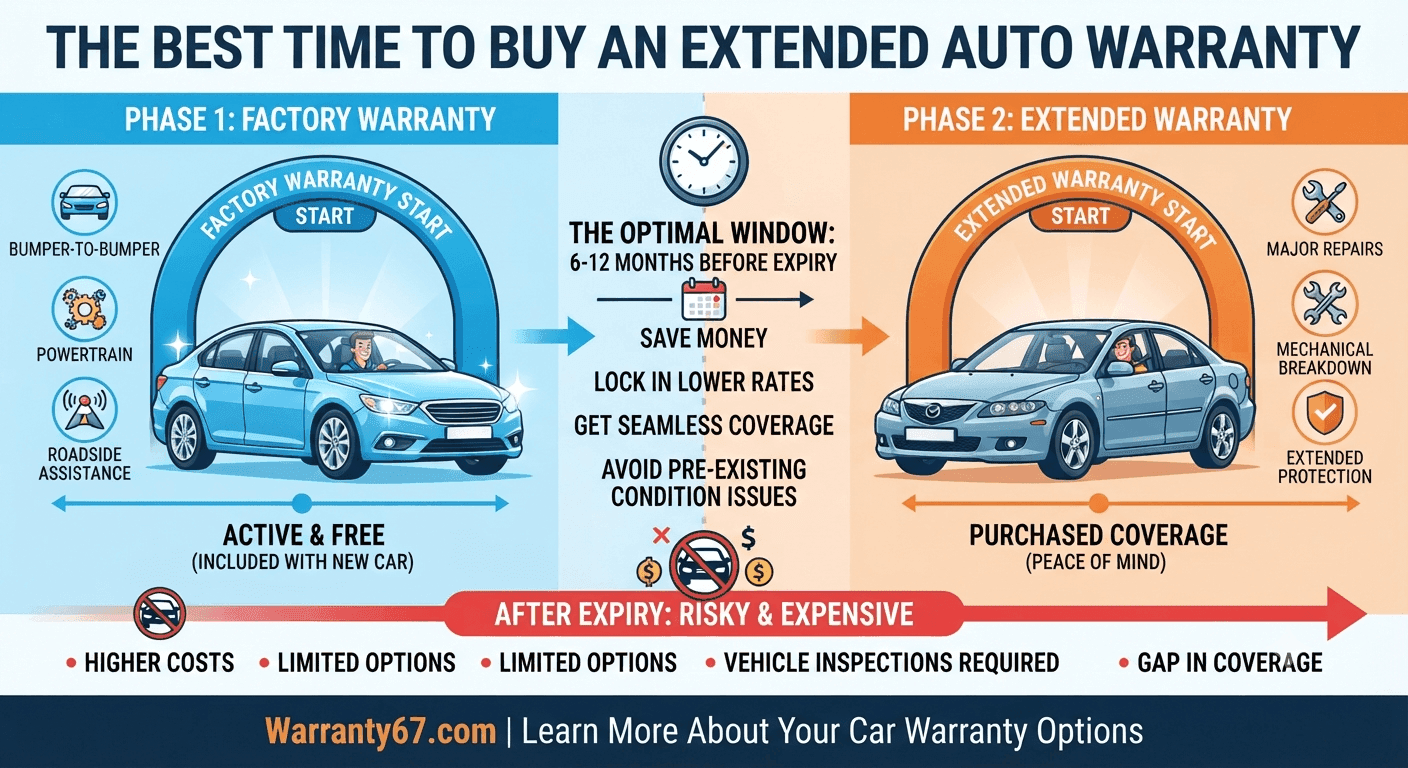
Nobody plans for their car to develop a fault the month after the manufacturer’s warranty ends. Yet it happens to plenty of drivers, and it raises a reasonable question: when is the right time to think about an extended car warranty?
If you’re wondering when to buy an extended car warranty, there isn’t one date that works for every vehicle. But GOV.UK advises that consumers don’t have to buy an extended warranty at the point of purchase and are free to shop around before deciding. That principle is worth understanding before you commit to anything.
This guide walks through when to consider extended cover, what to check before buying, and how it differs from your existing car insurance and manufacturer’s warranty.
What Is an Extended Car Warranty?
An extended car warranty provides additional protection after, or sometimes alongside, a manufacturer’s warranty. Depending on the provider, it may help with the cost of repairing specified mechanical or electrical components if they fail.
In the UK, extended warranty can describe different types of arrangements. Some are offered by manufacturers or retailers, while others are separate products from third-party providers. HMRC notes that a separately purchased extended warranty can, depending on its terms and structure, constitute insurance.
That’s why it’s worth looking past the name of the product and reading the actual terms.
A manufacturer’s warranty is also separate from your statutory consumer rights. Buying an extended warranty doesn’t remove rights you already have under UK consumer law. GOV.UK confirms an extended warranty is optional, and you keep your statutory rights regardless of whether you buy one.
Why Timing Is Worth Thinking About
Rather than assuming that buying early is automatically cheaper or easier to claim on (this depends on the provider, vehicle, age, mileage, and specific terms), the more defensible point is this:
Arranging cover before your manufacturer’s warranty expires gives you time to compare your options properly and check whether you can avoid a gap in protection.
In practice, that means:
- You’re not deciding under pressure after something has already gone wrong
- You can check exactly when your current warranty ends and what it still covers
- You have time to compare providers rather than accepting the first offer
- You can check whether a new plan would overlap with existing cover, rather than leaving a gap
When Should You Buy an Extended Warranty?
Before the Manufacturer’s Warranty Expires
This is a sensible time to review your options, not necessarily to buy immediately. It gives you room to compare a car warranty quote from more than one provider, rather than deciding in a rush once a fault has already appeared.
Shortly After Buying a Used Car
If you’ve bought a used car, the original manufacturer’s warranty may have already ended, or be close to it. Looking into cover soon after purchase, before any faults appear, is generally the more practical approach for anyone considering an extended warranty for a used car. Eligibility, though, depends on the provider’s own criteria for the vehicle’s age, mileage, and condition.
Through the Dealer vs. Buying Separately
Dealers often offer extended warranties as part of the sale. It’s convenient, but it’s worth comparing that offer against other providers before signing anything, since price, terms, and what’s actually covered can differ considerably.
What If You Leave It Too Long?
Waiting until the manufacturer’s warranty has expired, or until you’ve already noticed a problem, narrows your choices. Some providers ask for a vehicle inspection before agreeing to cover an older or higher-mileage car, and others may decline cover past a certain point. Repairs needed during a gap in cover may fall to the owner to pay for, unless another form of protection or consumer right applies.
Buying after the warranty has expired isn’t necessarily impossible, but eligibility and terms vary between providers, so it’s worth checking rather than assuming.
What to Check Before You Decide
| What to check | Why it matters |
| Manufacturer warranty end date | Shows when your existing cover finishes |
| Current mileage | Many warranty products have mileage or age eligibility limits |
| New warranty start date | Helps you identify any overlap with existing cover |
| Covered components | Shows which repairs may be included |
| Exclusions | Explains what the warranty does not cover |
| Excess | Tells you what you may have to pay towards a claim |
| Contract length | Shows how long the additional protection lasts |
Extended Warranty vs. Car Insurance: What’s the Difference?
An extended warranty and car insurance are not the same thing, and one doesn’t replace the other.
| Feature | Extended Warranty | Car Insurance |
| Covers mechanical breakdowns | May be covered, depending on terms | Not the primary purpose of motor insurance |
| Covers accidents, theft, fire | Usually not covered | May be covered, depending on your level of cover |
| Third-party liability | Not covered | Covered by motor insurance where applicable |
| Legal requirement | No | At least third-party cover is generally required to drive or keep a vehicle on UK public roads, subject to specific legal exceptions |
| Typical trigger | A covered part failing | An accident or another insured event |
Car insurance, whether third party, third party fire and theft, or comprehensive, is built around accidents, theft, and similar events. An extended warranty is a separate product, generally concerned with mechanical and electrical faults in specified components.
What Affects the Cost of an Extended Warranty?
Car warranty costs vary between providers, and several factors can influence the price, not simply when you buy it.
| Factor | How It Can Affect Cost |
| Vehicle age and mileage | Often influences price and eligibility |
| Make and model | Some models have historically required more repairs |
| Level of cover | More comprehensive plans typically cost more than basic mechanical cover |
| Excess chosen | A higher excess can lower the price |
| Contract length | Longer terms generally affect the overall cost |
When requesting an extended auto warranty quote, don’t compare price alone. Check the excess, covered components, exclusions, contract duration, and claims process. The cheapest option isn’t automatically the best value, and a more expensive one isn’t automatically better cover.
What About the Engine and Gearbox Cover?
Some extended warranty plans focus specifically on the parts responsible for powering and driving the car, most commonly the engine and gearbox, sometimes referred to together as powertrain cover. Exactly which components are included can vary between providers, so it’s worth checking the specific list rather than assuming engine and gearbox cover means the same thing across every plan.
If your manufacturer’s cover for these components is approaching its end date, check its terms carefully before comparing additional protection.
Common Mistakes to Avoid
Buying under pressure
You don’t have to make an immediate decision simply because you’re told your warranty is expiring. GOV.UK advises consumers to shop around and avoid feeling pressured when considering extended warranty products.
Assuming everything is covered
An extended warranty doesn’t automatically cover every repair. Wear and tear, maintenance items, and specific exclusions may apply.
Comparing only the monthly price
A monthly figure doesn’t tell you the full cost or extent of cover. Compare the total price alongside the terms.
Confusing warranty protection with insurance
An extended warranty is not a substitute for your motor insurance. Keep the two separate and check your insurance policy for what it actually provides.
Not checking who provides the cover
The FCA recognises motor extended warranties as contracts of insurance in its regulatory guidance, though the exact regulatory position can depend on how a particular product is structured. It’s worth using the FCA’s Firm Checker to confirm whether a provider is authorised for the relevant activity before signing up.
Skipping the exclusions
GOV.UK states that businesses selling extended warranties must provide important information clearly and must not mislead consumers about what is and isn’t covered. Read the exclusions as carefully as the list of what’s included.
Why the Timing Is Still Worth Considering
The point worth repeating just once more: this isn’t about buying a warranty simply because the factory warranty is ending. It’s about giving yourself room to understand what protection you already have, compare it against what’s on offer, and decide whether additional cover genuinely suits your situation, without the pressure of an active fault pushing the decision.
Key Takeaways
- There’s no universal best date to buy an extended car warranty
- Reviewing your options before your manufacturer’s warranty expires gives you time to compare providers and check for gaps in cover
- Compare the total cost, excess, exclusions, covered components and claims process, not just the price
- Used cars may qualify for extended warranty products, subject to the provider’s eligibility criteria
- At least third-party motor insurance is generally required by law; an extended warranty doesn’t replace it
- Check whether a provider is authorised using the FCA’s Firm Checker before committing
Frequently Asked Questions
Is it better to buy an extended warranty before the manufacturer’s warranty expires?
Reviewing your options before it expires gives you time to compare providers and check whether you’d have a gap in cover, rather than deciding under pressure after a fault appears.
Can I buy an extended car warranty after the manufacturer’s warranty expires?
Often, yes, but eligibility, pricing and terms vary by provider. Some may require a vehicle inspection or set age and mileage limits. Check with the provider directly rather than assuming.
Does an extended warranty cover everything that can go wrong with a car?
No. Cover depends on the specific contract. Components, exclusions, servicing conditions, excess, and claims requirements can all affect whether a repair is included.
Is an extended warranty the same as breakdown cover?
No. Breakdown cover is generally designed to provide roadside assistance or recovery if your car breaks down. An extended warranty may cover the cost of specified repairs, subject to its terms. They serve different purposes.
What’s the difference between an extended warranty and a vehicle service contract?
Vehicle service contract is a term sometimes used for extended warranty-type products, particularly outside the UK. In the UK, extended warranty is the term most drivers search for and recognise, but whatever it’s called, it’s worth checking the actual terms rather than assuming two differently named products are identical.
Need Help Understanding Extended Warranty Options?
Choosing the right cover depends on your vehicle, how you use it, and the protection you already have. If you have questions about extended warranty options or how they differ from your motor insurance, review your policy documents and speak with the relevant provider or a qualified insurance professional.
Final Thoughts
The right time to think about an extended car warranty is before you’re facing an unexpected repair bill and before your existing manufacturer’s protection runs out without you understanding what happens next.
Start by checking your current warranty end date, your vehicle’s mileage, and how long you expect to keep the car. Then compare the available options: cover, exclusions, excess, claims process, and total cost, rather than assuming that buying early is automatically the cheaper or easier route.