Your engine makes a strange grinding noise on the highway. Your transmission slips when you shift gears. Suddenly you’re staring down a repair estimate that costs more than your last car payment.
This is the moment most drivers start asking: does my powertrain warranty cover this?
If you’re confused about what a powertrain warranty actually protects, you’re not alone. Many drivers assume it covers everything under the hood and are surprised to learn it doesn’t. This guide breaks down what a powertrain warranty is, what it typically covers, how it differs from other vehicle protection plans, and what to consider before you buy, extend, or file a claim.
What Is a Powertrain Warranty?
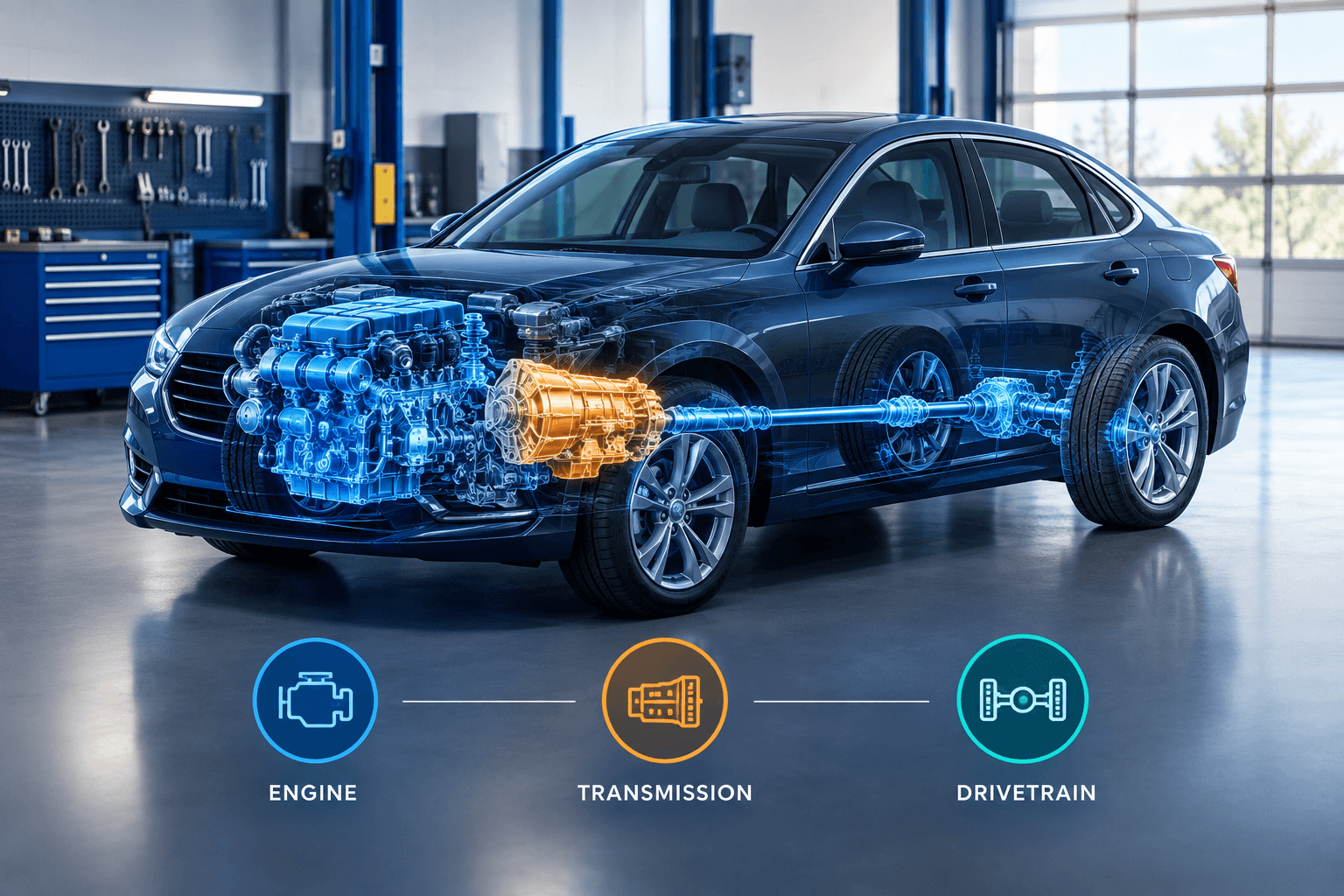
A powertrain warranty covers the core mechanical components that make your vehicle move: the engine, transmission, and drivetrain. Think of it as protection for the parts responsible for generating power and delivering it to your wheels.
This is different from a bumper-to-bumper warranty, which covers a much wider range of components, including electronics, air conditioning, and interior features.
A powertrain warranty is narrower by design. It focuses specifically on the systems most critical to keeping your car running and most expensive to repair when they fail.
What’s Typically Included in Powertrain Coverage
While exact terms vary by manufacturer or provider, powertrain coverage generally includes:
- Engine – internal components like the cylinder block, cylinder heads, pistons, and timing components
- Transmission – gears, torque converter, and related internal parts
- Drivetrain components – driveshaft, differential, and axles that transfer power to the wheels
Some plans may also include seals and gaskets directly related to these systems, but this varies significantly between providers.
What’s Usually Excluded
Powertrain warranties typically do not cover:
- Electrical systems (infotainment, wiring, sensors)
- Air conditioning and heating
- Brakes and suspension
- Interior components (seats, dashboard, upholstery)
- Cosmetic issues (paint, dents, glass)
- Wear-and-tear items like brake pads or wiper blades
Because coverage details vary by manufacturer, dealership, or third-party provider, it’s important to review the specific terms of the warranty or service contract before assuming a repair is included.
How Powertrain Warranties Work
Most new vehicles come with a factory powertrain warranty included in the original purchase price, typically lasting longer than the standard bumper-to-bumper warranty. Once that expires, drivers often look into an extended powertrain warranty or a broader vehicle protection plan to avoid paying out of pocket for major repairs.
Here’s the general process when something goes wrong:
- Diagnosis – A qualified repair facility identifies the mechanical issue.
- Coverage verification – The provider or administrator reviews whether the repair may qualify under the contract.
- Authorization – Some plans require authorization before covered repairs begin.
- Repair and payment – If the repair is approved, payment is handled according to the terms of the agreement, including any applicable deductible.
Deductibles, authorization steps, and approved repair facilities can differ depending on whether the warranty comes from the manufacturer or a third-party provider.
Factors That Can Affect Coverage
Several factors influence whether a repair is covered and how much you might pay:
- Age and mileage of the vehicle at the time of purchase or claim
- Maintenance history – some contracts include maintenance requirements that may be reviewed as part of a claim
- Type of provider – manufacturer-backed vs. third-party extended auto warranty
- Pre-existing conditions – issues present before coverage began are typically excluded
- Deductible structure – flat-rate vs. per-repair deductibles
Powertrain Warranty vs. Other Coverage Options
| Coverage Type | What It Generally Covers | Typical Duration |
| Powertrain Warranty | Engine, transmission, drivetrain | Often longer than bumper-to-bumper |
| Bumper-to-Bumper Warranty | Most vehicle systems, including electronics | Shorter than powertrain coverage |
| Extended Auto Warranty | Varies; can mirror powertrain or bumper-to-bumper terms | Set by contract, often post-factory warranty |
| Vehicle Protection Plan | Customizable; may include powertrain plus additional components | Varies by provider |
This table is a general overview. Actual terms depend entirely on the specific contract you’re reviewing.
Extended Powertrain Warranty for Used Cars
Buying a used car often means the factory warranty has already expired or is close to it. This is where an extended powertrain warranty for used cars becomes relevant for many buyers.
Key considerations for used vehicles include:
| Consideration | Why It Matters |
| Vehicle mileage at purchase | Providers often have mileage caps for eligibility |
| Vehicle condition | Pre-existing wear may affect what’s covered |
| Provider reputation | Claims process and reliability vary widely |
| Contract transparency | Look for clear terms on exclusions and deductibles |
Reading the fine print matters more with used vehicles, since components may already show wear that could affect future claims.
Common Mistakes and Misconceptions
Mistake 1: Assuming “powertrain” means “everything mechanical.”
Many drivers are surprised when a suspension or air conditioning repair isn’t covered.
Mistake 2: Overlooking maintenance documentation.
Some warranty contracts include maintenance requirements and may request maintenance documentation when evaluating a claim. Keeping service records can help demonstrate that you followed the vehicle manufacturer’s recommended maintenance schedule.
Mistake 3: Not comparing manufacturer vs. third-party terms.
An extended auto warranty from a third party may have different exclusions, deductibles, or approved repair shops than a manufacturer plan.
Mistake 4: Confusing a warranty with auto insurance.
A powertrain warranty is not the same as your car insurance policy. Your insurance handles things like liability coverage, collision coverage, comprehensive coverage, and uninsured motorist coverage for accidents and damage rather than mechanical breakdowns.
Tip: Keep both your warranty documentation and insurance policy details in one place so you know exactly which protection applies to a given situation.
Why Understanding Powertrain Coverage Matters
Knowing what your powertrain warranty covers and what it doesn’t helps you:
- Potentially reduce the financial impact of certain covered mechanical repairs
- Make more informed decisions when buying a new or used vehicle
- Understand how this coverage fits alongside your broader auto insurance coverage
- Ask better questions before signing a contract or filing a claim
- Plan realistically for long-term vehicle ownership costs
This clarity supports better financial preparedness and reduces stress when something does go wrong.
Key Takeaways
- A powertrain warranty covers the engine, transmission, and drivetrain but not the entire vehicle.
- It’s different from a bumper-to-bumper warranty and from your car insurance policy.
- Coverage terms, deductibles, and exclusions vary by manufacturer and provider.
- Maintenance documentation can play a role in how a claim is evaluated.
- Used vehicles may qualify for extended powertrain warranty options, but terms should be reviewed carefully.
- This coverage complements but doesn’t replace standard auto insurance coverage.
Frequently Asked Questions
1. Does a powertrain warranty cover the transmission?
Yes, in most cases. Transmission components are typically one of the core systems included under powertrain coverage, though specific internal parts covered can vary by contract.
2. Is a powertrain warranty the same as car insurance?
No. A powertrain warranty covers mechanical failures in specific components, while car insurance covers things like accidents, liability, theft, and damage under your policy’s coverage types.
3. Can I get an extended powertrain warranty for a used car?
Many providers offer extended powertrain warranties for used vehicles, though eligibility often depends on the car’s mileage, age, and condition at the time of purchase.
4. What’s not covered under a typical powertrain warranty?
Electrical systems, air conditioning, brakes, suspension, and cosmetic issues are commonly excluded, though exclusions vary by provider and contract.
5. Does regular maintenance affect my powertrain warranty coverage?
It can. Some contracts include maintenance requirements, and providers may request service records as part of reviewing a claim.
6. Need Help Understanding Your Car Insurance Options?
Choosing the right coverage can depend on your vehicle, driving needs, location, and individual circumstances. If you have questions about your policy or want to explore your coverage options, contact our team to discuss your needs.
Final Thoughts
A powertrain warranty can offer meaningful protection against some of the most expensive repairs a vehicle can need, but it’s not a catch-all. Understanding exactly what’s covered, what’s excluded, and how it differs from both bumper-to-bumper warranties and your car insurance policy puts you in a much stronger position as a vehicle owner.
Every contract is different, so take time to review the specific terms of any warranty or service contract before you buy and don’t hesitate to ask a qualified professional if you have questions specific to your situation.