
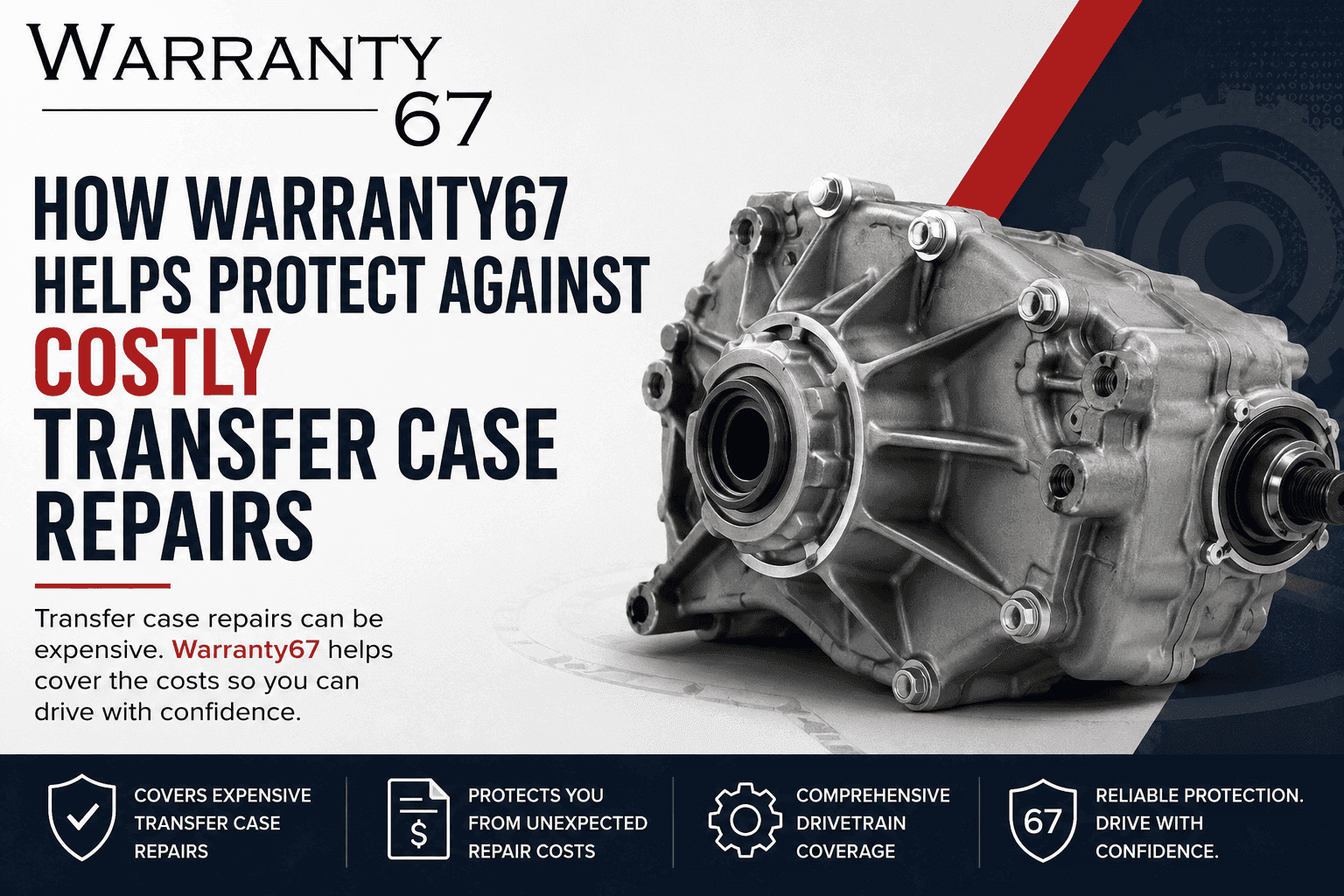
A grinding noise under your vehicle. A sudden clunk when shifting into four-wheel drive. A dashboard light you’ve never seen before. If any of this sounds familiar, your transfer case may be the culprit – and transfer case repairs can be expensive.
Many drivers assume their auto insurance policy will step in when a mechanical part fails. In most cases, it won’t. Standard car insurance coverage, including comprehensive coverage and collision coverage, is built to handle accidents, theft, and specific types of damage, not components that wear out over time.
This is where a vehicle protection plan like Warranty67 can help. Below, we’ll break down what a transfer case does, why repairs cost so much, how extended auto warranties differ from insurance, and what to weigh before choosing a complete car warranty for your vehicle.
What Is a Transfer Case, and Why Does It Matter?
A transfer case is a drivetrain component used in many four-wheel-drive (4WD) and some all-wheel-drive (AWD) vehicles. Depending on the vehicle’s design, it helps distribute engine power between the front and rear axles, supporting traction on rough terrain, snow, mud, and uneven surfaces.
When it’s working properly, most drivers never think about it. When it fails, the vehicle may become difficult to operate or may not function as intended, particularly when 4WD capability is needed.
Common Signs of Transfer Case Problems
| Symptom | What It May Indicate |
| Difficulty shifting between 2WD and 4WD | Internal wear, low fluid, or a failing shift motor |
| Grinding, whining, or clunking noises | Worn gears, bearings, or chain components |
| Fluid leaks near the center of the vehicle | Damaged seals or gaskets |
| Dashboard warning lights related to the drivetrain | Sensor fault or a developing mechanical issue |
| Vehicle unexpectedly slipping out of gear | Internal component failure |
This table is a general guide, not a diagnosis. If you notice any of these symptoms, have a qualified mechanic inspect the vehicle as soon as possible. Continuing to drive can lead to more extensive drivetrain damage.
Why Transfer Case Repairs Are So Expensive
Repair costs vary widely depending on the vehicle’s make, model, and the extent of the damage. Several factors tend to drive the price up:
- The transfer case is a complicated, precision-built mechanical unit.
- Labor is often extensive, since the component can be difficult to access.
- Some vehicles require specialized or manufacturer-specific parts.
- In more severe cases, full replacement may be necessary rather than repair.
- Regional labor rates and parts availability can also affect the final cost.
Because pricing depends so heavily on the specific vehicle, region, and shop, always request a written estimate before authorizing any work.
Auto Insurance vs. Extended Auto Warranties: Understanding the Difference
This is one of the most misunderstood distinctions among vehicle owners. Auto insurance and vehicle warranties serve fundamentally different purposes.
| Feature | Auto Insurance Policy | Extended Auto Warranty or Vehicle Service Contract |
| Purpose | Covers accidents, liability, theft, and specific damage | May cover eligible mechanical components, depending on the plan and contract terms |
| Example Coverage | Liability coverage, collision coverage, comprehensive coverage | Certain drivetrain, transmission, or engine components, subject to contract terms |
| Triggered By | Accidents, weather events, theft, vandalism | Eligible mechanical or electrical breakdowns, depending on the contract terms |
| Deductible | Set by your insurance policy | Set by your warranty contract |
| Regulated By | State insurance departments | Varies by provider and contract terms |
Your insurance premium is generally shaped by risk factors such as your driving history, vehicle, location, and the coverage you select, while mechanical wear is generally not the type of risk standard auto insurance is designed to cover. A warranty, on the other hand, is a separate contract designed to help offset repair costs for eligible components, subject to that contract’s specific terms.
A quick note on terminology: your policy’s limits simply refer to the maximum amount an insurer will pay out for a covered claim, while your deductible is the amount you pay out of pocket before coverage applies. Both figures are set out in your specific policy documents.
Coverage details, policy limits, and contract terms vary not only by provider but also by state. If you have questions about what’s required or available where you live, consult a licensed insurance professional or your warranty provider directly.
Factors That Can Affect Coverage and Repair Costs
Several variables influence whether a repair is covered and how much a driver may pay out of pocket:
- Vehicle age and mileage: Older or higher-mileage vehicles may face different eligibility rules depending on the warranty provider’s terms.
- Maintenance history: Documented, regular maintenance can matter when a claim is reviewed.
- Type of plan selected: Coverage tiers differ between basic and more complete car warranty plans.
- Deductible amount: Warranty plans often include a set amount the owner pays before coverage kicks in, similar to an insurance deductible.
- Pre-existing conditions: Mechanical problems that existed before coverage began may be excluded under the terms of the contract.
- Labor and parts costs: Regional labor rates and part availability can affect out-of-pocket costs, even with coverage in place.
Common Mistakes Drivers Make
Avoiding these mistakes can help drivers make more informed decisions:
- Assuming insurance covers mechanical breakdowns. Standard comprehensive and collision coverage generally don’t extend to parts that fail from normal wear.
- Ignoring warning signs. Delaying an inspection can turn a minor issue into a major, far more expensive repair.
- Skipping the fine print. Every warranty and insurance policy has specific terms, exclusions, and policy limits worth reading closely.
- Neglecting maintenance records. Failing to follow required maintenance procedures or keep service records may create issues when a warranty claim is reviewed, depending on the contract terms.
- Choosing coverage on price alone. The cheapest plan isn’t always the most complete car warranty for your vehicle’s actual needs.
Why Understanding Your Coverage Options Matters
Being informed about the difference between insurance and vehicle warranties helps drivers:
- Avoid unexpected repair costs
- Make more confident decisions about vehicle protection
- Understand what their insurance policy does and doesn’t include
- Ask sharper questions when comparing extended auto warranties
- Plan more effectively for long-term vehicle ownership costs
No plan can guarantee savings or eliminate every future repair expense. But understanding your options supports better financial preparedness, and a bit more peace of mind.
Key Takeaways
- A transfer case is a key drivetrain component in many 4WD and some AWD vehicles, and it can be costly to repair when it fails.
- Auto insurance typically does not cover mechanical breakdowns like transfer case failure.
- Extended auto warranties, such as Warranty67, are designed to help with eligible mechanical repairs, subject to contract terms.
- Insurance and warranty coverage both vary by provider and by state, so reviewing your specific policy or contract is essential.
- Regular maintenance and prompt attention to warning signs may help identify problems early and reduce the risk of more extensive damage.
Frequently Asked Questions
1. Does car insurance cover transfer case repairs?
Generally, no. Auto insurance policies, including comprehensive and collision coverage, are designed for accidents, theft, and covered damage events – not mechanical part failure from normal wear.
2. What’s the difference between an insurance claim and a warranty claim?
An insurance claim is filed after an accident or covered event under your auto insurance policy. A warranty claim is filed when a covered mechanical component fails under the terms of your warranty contract.
3. Is a transfer case covered under a complete car warranty?
It depends on the specific plan and provider. Some vehicle service contracts may include eligible drivetrain components, but coverage, exclusions, and deductibles vary by contract. Review the specific terms before purchasing.
4. How do I know if my vehicle has a transfer case?
Most 4WD and some AWD vehicles have one. Your owner’s manual or a certified mechanic can confirm this for your specific vehicle.
5. Can I get an extended warranty on an older vehicle?
Eligibility often depends on the vehicle’s age, mileage, and condition. Requirements vary by provider, so check directly with the warranty company.
Need Help Understanding Your Coverage Options?
Choosing between insurance coverage and a vehicle warranty depends on your vehicle, driving habits, and individual needs. If you have questions about your auto insurance policy or want to learn more about extended auto warranty options like Warranty67, contact our team to discuss what makes sense for your situation.
Conclusion
Transfer case repairs can be a significant, unexpected expense – and standard auto insurance typically isn’t built to cover them. Understanding the distinction between insurance coverage and extended auto warranties helps drivers make more informed, confident decisions about protecting their vehicle. Reviewing your current policy, keeping up with recommended maintenance, and exploring vehicle protection options like Warranty67 can help you better prepare for unexpected repair expenses.