
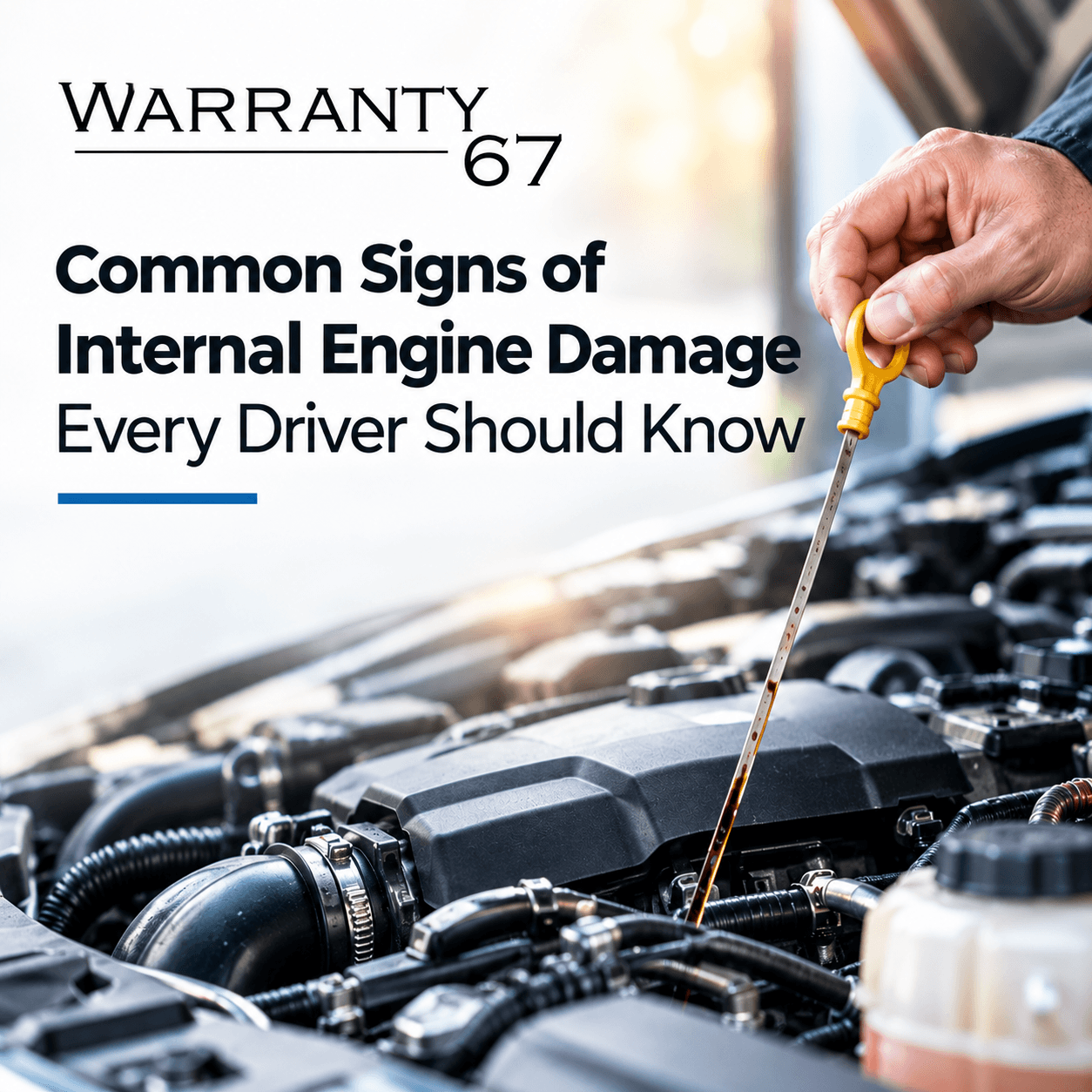
A knocking sound, an oil warning light, or a sudden loss of power can leave any driver wondering whether a major repair is coming. Internal engine damage can build gradually or follow a lubrication problem, and ignoring early signs may make it worse.
Engines don’t usually fail without warning. Most of the time, there’s a sound, a light, or a change in how the car feels first. Many of those signals trace back to internally lubricated engine parts: the pistons, bearings, and camshaft that depend on a steady film of oil. Below, we walk through the warning signs, what may cause them, and how a vehicle service contract differs from auto insurance.
What Are Internally Lubricated Engine Parts?
Internally lubricated engine parts are the moving components inside the engine that depend on oil to reduce friction and heat. When lubrication is inadequate, wear can accelerate.
Common examples include:
- Pistons and piston rings
- Crankshaft and connecting rods
- Camshaft, valves, and lifters
- Engine bearings
- Timing chain and gears
- Oil pump
Oil forms a protective film between many of these surfaces. When oil is low, degraded, or not circulating properly, friction and heat can rise and contribute to serious damage.
8 Common Signs of Internal Engine Damage
A warning sign alone does not confirm internal engine damage. It is a reason to get the vehicle inspected.
- Engine knocking noise: A deep metallic knock, especially under acceleration, can point to worn bearings or poor lubrication. If it is loud or paired with an oil-pressure warning, pull over safely, switch off the engine, and arrange assistance.
- Low oil pressure: An oil-pressure warning light, new engine noises, or overheating can indicate inadequate lubrication. An oil-pressure warning requires stopping safely and switching off the engine. Follow your owner’s manual and arrange assistance rather than continuing to drive. Checking the oil level alone does not show that oil pressure is safe.
- Excessive engine oil consumption: Adding oil often between changes may indicate leaks or internal wear. Normal use varies by manufacturer, so check your manual and note how quickly the level drops.
- Reduced power: Sluggish acceleration can reflect lost compression, but fuel, ignition, or airflow problems can look similar. It isn’t always an emergency, but have it diagnosed promptly. If power drops suddenly or other warnings appear, stop safely.
- Overheating: A rising temperature gauge may signal a cooling problem, and prolonged heat can harm internal parts. Pull over, switch off the engine, and never open a hot radiator cap.
- Blue-gray exhaust smoke: This may indicate oil burning in the combustion chamber, although smoke color alone is not a diagnosis.
- Metal particles in the oil: Fine traces can be normal, but a sudden increase deserves inspection by a qualified repair facility.
- Persistent ticking or rattling: New or worsening sounds can come from the valve train, timing components, or low oil pressure. Note when they happen and share the details with the repair facility.
What Causes Internal Engine Damage?
The causes of internal engine damage often build over time. This table shows common ones and ways to reduce avoidable risk.
| Cause | Possible effect | Prevention tip |
| Low oil level | More friction and wear | Check oil regularly and fix leaks |
| Delayed oil changes | Degraded oil and deposits | Follow the manufacturer’s schedule |
| Overheating | Stress on internal parts | Maintain the cooling system |
| Wrong oil specification | Lubrication that may not suit the engine | Use oil that meets manufacturer specifications |
| Ignored noises | Existing faults may worsen | Get an inspection early |
These habits improve your odds, but they don’t remove the risk. A high-mileage engine, hard driving, or a defect you can’t see can still cause problems, sometimes with no warning at first.
Does Insurance or a Service Contract Cover Engine Damage?
Standard auto insurance generally addresses events such as accidents, theft, and certain non-collision damage. It typically does not cover ordinary mechanical breakdown or gradual wear. Outcomes vary by insurer, policy wording, and state.
| Option | General purpose | Internal engine breakdown |
| Collision coverage | Damage from a covered collision | Generally not covered |
| Comprehensive coverage | Specified non-collision events | Generally not covered for ordinary wear |
| Vehicle service contract | May cover specified mechanical failures | Depends on contract terms, exclusions, and claim conditions |
A vehicle service contract, often marketed as an extended auto warranty, may help with covered repairs after the factory warranty ends. Never assume a component is covered from its name alone. Check the exclusions, deductible, maintenance requirements, and repair facility rules.
A used car extended warranty or a high mileage car warranty may be worth researching, but eligibility depends on the vehicle and the provider’s terms. A repair claim under a service contract is also different from an insurance claim under an auto policy. You can review Warranty67’s plans and coverage to see how options are structured.
Common Mistakes and Tips
- Ignoring warning lights: An oil-pressure warning means stopping safely and switching off the engine, even if the engine sounds normal.
- Relying on an oil level check alone: A normal dipstick reading doesn’t confirm that oil pressure is safe, so follow your owner’s manual.
- Driving while overheating: Excess heat can cause additional damage.
- Skipping scheduled maintenance: Follow the manufacturer’s recommendations.
- Assuming insurance covers breakdowns: Review your policy and any separate service contract.
- Not reading exclusions: Confirm what is covered before buying a plan.
Keep your service records. Oil change and repair receipts help document your maintenance history and may be important if a vehicle service contract requires proof of maintenance.
Why It Matters
Knowing the warning signs helps you act earlier, which may reduce the chance of larger repairs. Understanding your coverage options also supports better planning for repair costs. Neither guarantees a particular outcome, but both lead to more informed decisions.
Key Takeaways
- Knocking, oil-pressure warnings, high oil use, and overheating can signal engine trouble.
- Pistons, bearings, and other internal parts depend on a steady supply of clean oil.
- An oil-pressure warning, severe knocking, or overheating means stopping safely and arranging assistance.
- Only a professional diagnosis can confirm the cause.
- Standard auto insurance generally does not cover ordinary mechanical breakdown.
- Keep service receipts, since a service contract may require proof of maintenance.
Frequently Asked Questions
What is the first sign of internal engine damage?
There is no single first sign for every engine. Unusual knocking, rising oil use, reduced power, or an oil-pressure warning may indicate a problem. An oil-pressure warning requires stopping safely and switching off the engine. Reduced power is not always urgent, but it should be diagnosed promptly, and you should stop safely if it happens suddenly or with other warnings.
Can low engine oil damage internal engine parts?
Yes, it can. Low oil can increase friction and heat and contribute to premature wear. Severe oil starvation can cause significant damage.
Can an engine be damaged without making noise?
Yes, it can. Changes in oil consumption, performance, or diagnostic readings may appear before any noticeable noise.
Is internal engine damage always repairable?
Not always. Some problems can be fixed by replacing individual components, while severe damage may make a rebuild or replacement more practical. The repair estimate and vehicle condition guide that choice.
Will an extended warranty cover a damaged engine?
It depends on the vehicle service contract and the cause of the damage. Plans may exclude pre-existing conditions or neglected maintenance, so review the contract before assuming a repair qualifies.
Need Help Understanding Your Vehicle Protection Options?
Choosing a plan can depend on your vehicle, mileage, and needs. If you are comparing vehicle protection plans, including an affordable extended auto warranty, review the covered components and exclusions first. You can also request auto warranty quotes and compare the written contract terms alongside the price.
Conclusion: Respond Early to Engine Warning Signs
Internal engine damage often starts with a small change in sound, oil use, temperature, or performance. Paying attention, arranging timely diagnosis, keeping service records, and knowing what your coverage includes can help you manage repair costs with more confidence.