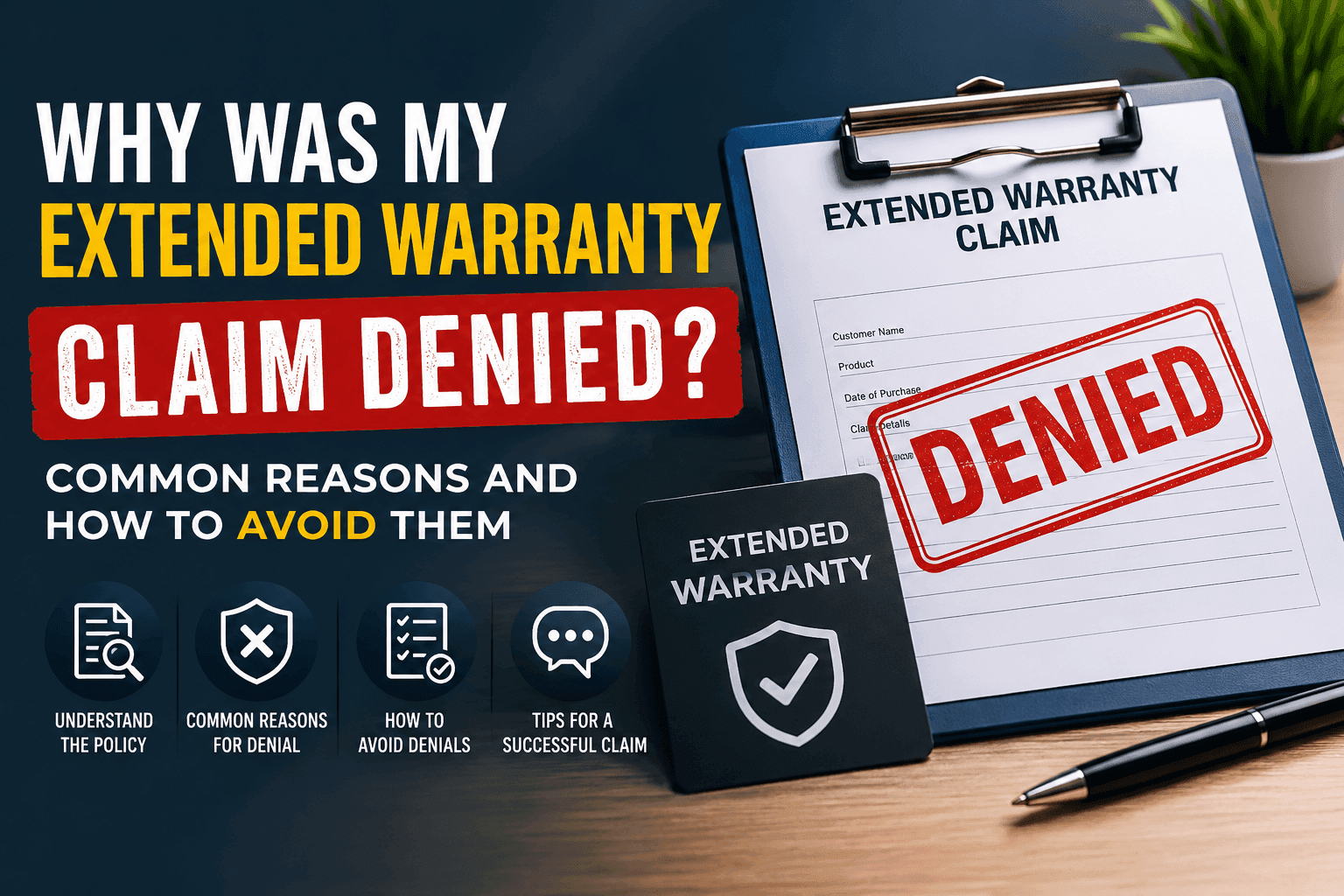
Few things are more frustrating than sending your vehicle in for a repair, expecting your extended warranty to cover the cost, and then receiving a denial letter instead. If you’ve recently had an extended warranty claim denied, you’re probably wondering what went wrong and whether there’s anything you could have done differently.
Extended warranty claim denials can occur for several reasons, and the specific reason is not always immediately clear to vehicle owners. Sometimes it comes down to a coverage exclusion in the contract. Other times, it’s a paperwork issue or a documentation requirement that wasn’t met.
In this article, we’ll walk through the most common reasons for warranty claim denial, explain how the claims process typically works, and share practical tips on how to avoid warranty claim denial in the future. We’ll also address a common question many vehicle owners have: why was my warranty claim denied? We’ll briefly touch on how vehicle protection plans relate to broader auto insurance coverage, since understanding the difference can save time and confusion when something goes wrong.
What Is an Extended Warranty, and How Is It Different From Car Insurance?
Before diving into why warranty claims are denied, it helps to clarify what an extended warranty actually covers because it’s often confused with car insurance.
An extended warranty, sometimes called a vehicle service contract, may help cover the cost of repairing or replacing specific mechanical or electrical components, depending on the terms of the agreement. Coverage can vary based on the plan, covered components, exclusions, and other contract terms.
Car insurance, on the other hand, typically covers different risks, such as:
- Liability coverage for injuries or property damage you cause to others
- Collision coverage for damage to your vehicle after an accident
- Comprehensive coverage for non-collision events like theft, vandalism, or weather damage
- Uninsured motorist coverage for certain accidents involving drivers without adequate insurance, depending on the policy and state
Because these two products serve different purposes, a mechanical failure denied under an extended warranty will not necessarily be covered by an auto insurance policy, and vice versa. Understanding this distinction can help you determine where to direct your claim and questions when something goes wrong.
Common Reasons for Extended Warranty Claim Denial
Understanding why warranty claims are denied can help vehicle owners identify potential coverage or claims issues before authorizing repairs or submitting a claim.
1. The Repair Falls Under a Coverage Exclusion
Extended warranty or vehicle service contracts typically include coverage limitations and exclusions. These terms explain which repairs, components, or situations may not qualify for coverage. Common exclusions may include:
- Wear-and-tear items such as brake pads, tires, or wiper blades
- Pre-existing conditions that existed before the contract started
- Cosmetic damage that doesn’t affect mechanical function
- Certain aftermarket parts or modifications
If your claim falls into an excluded category, it may not qualify for coverage even if the repair itself is necessary.
2. Lack of Documented Maintenance
Some vehicle service contracts may require owners to maintain their vehicle according to the manufacturer’s recommended maintenance schedule and provide records if a claim is reviewed.
If those records aren’t available, the provider may request additional documentation or examine whether a lack of maintenance contributed to the failure, which can affect how the claim is evaluated.
Keeping records of routine maintenance and repairs can help you maintain a clear history of your vehicle.
3. The Claim Was Filed Incorrectly or Late
Extended warranty claims often have specific procedural requirements. Missing a required pre-authorization step, failing to follow the repair facility or authorization requirements outlined in the contract, or submitting paperwork after an applicable deadline can affect whether a claim is approved.
Before authorizing repairs, review your contract and determine whether the provider or contract administrator needs to be contacted first.
4. The Component Isn’t Covered by Your Plan
Not all vehicle protection plans are created equal. Some offer broader coverage, while others cover only specific components.
Depending on how your contract defines coverage, a failed component that is not included or is specifically excluded may not qualify for coverage.
Review your agreement to understand:
- Which components are covered
- Which components or repairs are excluded
- Whether a deductible applies
- Any applicable limitations or conditions
This can help answer the question: Why was my warranty claim denied?
5. Damage Was Caused by an Accident, Not a Mechanical Failure
If an inspection determines that the damage resulted from a collision, road hazard, or another accident-related event rather than a covered mechanical failure, the repair may fall outside the terms of the extended warranty or vehicle service contract.
Depending on the circumstances and your insurance policy, the damage may instead be relevant to an auto insurance claim involving collision coverage, comprehensive coverage, or other applicable coverage.
6. The Contract Expired or an Applicable Limit Was Reached
Extended warranties may have time and mileage limits. If a breakdown occurs after the contract has expired or outside an applicable coverage period, the repair generally may not qualify for coverage.
Review:
- Your contract start and expiration dates
- Applicable mileage limits
- Any waiting periods
- Other conditions that may affect when coverage applies
Extended Warranty Coverage Exclusions and Situations at a Glance
| Situation | Potential Coverage Consideration |
| Engine failure | May be covered if the failed component and cause of failure meet the contract’s terms |
| Missing maintenance records | Additional documentation may be requested depending on contract requirements |
| Brake pad wear | Often excluded unless specifically included in the plan |
| Collision-related damage | Generally outside mechanical breakdown coverage and may fall under applicable auto insurance coverage |
| Repair started before authorization | May affect coverage if prior authorization is required by the contract |
| Claim filed after mileage or time limit | Generally may not qualify if the contract has expired or applicable limits have been exceeded |
Coverage decisions can vary by provider, contract, vehicle condition, and the circumstances of the repair. Always review your specific agreement for exact terms.
What to Do If Your Warranty Claim Was Rejected
If you’ve received a warranty claim rejected notice, don’t assume the decision is automatically final. Here’s how to work through it:
- Request the specific reason for the denial. Ask which component, exclusion, or contract provision was applied. If the reason for the denial or the applicable contract provision is unclear, ask for clarification.
- Compare the explanation to your actual contract. Look closely at covered components, exclusions, deductible requirements, waiting periods, and maintenance obligations to see whether the reason matches what your agreement says.
- Gather supporting documentation. If the denial cites missing records or an unverified maintenance history, pull together receipts, service invoices, or inspection reports that may support your case.
- Ask about a review or dispute process. Some providers or administrators may offer a review or dispute process for a denied claim. Ask your administrator directly whether this option is available and what it requires.
Taking these steps won’t guarantee a different outcome, but they can help you better understand the decision and identify whether additional information or a review process may be available.
Common Mistakes Drivers Make and Tips to Avoid a Denied Claim
Understanding why extended warranty claims are denied is only half the battle. Here’s how to reduce avoidable problems when submitting a claim.
Common mistakes include:
- Not reading the full list of exclusions before purchasing a plan
- Not following applicable maintenance requirements outlined in the contract or recommended by the vehicle manufacturer
- Not following the repair facility or authorization requirements in the contract
- Not saving receipts or maintenance records
- Missing a required pre-authorization step before repairs begin
Practical Tips to Avoid a Warranty Claim Denial
- Keep maintenance receipts. Store digital and physical copies so they are available if documentation is requested.
- Read your contract carefully. Understand which components and situations may be excluded.
- Confirm whether your contract has repair facility or authorization requirements before authorizing any work.
- Contact the provider or administrator before repairs begin whenever your contract requires pre-authorization.
- Track your mileage and contract expiration date so you understand when coverage may end.
- Ask questions upfront. If a situation seems unclear, contact the provider or administrator before assuming a repair is covered.
Pros and Cons of Vehicle Protection Plans
| Pros | Cons |
| Can help offset the cost of certain covered mechanical repairs | Doesn’t cover every component or situation |
| May offer peace of mind for some vehicle owners, including those with higher-mileage vehicles | May require compliance with applicable maintenance and claims requirements |
| Can be tailored with different coverage tiers | Plan prices, deductibles, coverage terms, and limits can vary |
| Separate from auto insurance coverage | Claims may be affected by documentation or procedural requirements |
Why Understanding Your Coverage Matters
Knowing the difference between what your extended warranty covers and what your auto insurance policy covers can help you avoid confusion and wasted time when something goes wrong with your vehicle.
Understanding your coverage in advance also supports better financial preparedness. If you know which repairs are excluded, you can better prepare for potential out-of-pocket expenses instead of being caught off guard. If a mechanical issue does arise, understanding the correct claims process from the start can help reduce avoidable problems during the claims process.
Because insurance policies and warranty contracts can vary significantly between providers and states, it’s worth reviewing your specific documents rather than relying on general assumptions.
If you’re still deciding whether a vehicle protection plan makes sense for your car, it may also help to learn more about what extended warranties typically cover, extended warranty coverage for used cars, and how vehicle protection plans can help with unexpected repair costs.
Key Takeaways
- An extended warranty claim denied decision may result from coverage exclusions, contract limitations, documentation issues, or failure to follow applicable claims procedures.
- Extended warranties and auto insurance cover different types of risks, including mechanical breakdowns and certain accident-related or insured events.
- Keeping maintenance records and following your contract’s claims process can help reduce avoidable issues when submitting a claim.
- Not all vehicle protection plans offer the same coverage, so reviewing exclusions before you need to file a claim is important.
- If a repair is denied, ask the provider or administrator for a clear explanation so you understand which contract provision was applied.
Frequently Asked Questions
Why was my extended warranty claim denied?
An extended warranty claim may be denied because the repair is excluded, the failed component is not covered, the condition existed before coverage began, contract requirements were not met, or the required claims process was not followed. The specific reason depends on your agreement and the circumstances of the claim.
Can I appeal a denied extended warranty claim?
Some providers or administrators may offer a review or dispute process, particularly if additional documentation is available. Contact your provider or administrator to ask about the process available under your specific agreement.
Does car insurance cover what my extended warranty denies?
Not necessarily. Auto insurance and extended warranties cover different types of events. Auto insurance may cover certain accident-related damage, theft, weather damage, or other covered losses, depending on your policy. Extended warranties generally address certain covered mechanical or electrical failures.
How can I avoid a warranty claim denial in the future?
Keep detailed maintenance records, follow applicable repair and authorization requirements, complete required pre-authorization steps, and review your contract’s exclusions so you understand what may and may not be covered.
Is an extended warranty the same as vehicle protection insurance?
The terms may sometimes be used loosely, but they can refer to different products depending on the provider. An extended warranty or vehicle service contract is generally different from an auto insurance policy. Always read the specific contract or policy to understand exactly what is included.
Need Help Understanding Your Vehicle Protection Options?
Choosing a vehicle protection plan can depend on your vehicle, driving needs, and the terms of the coverage you’re considering. Before purchasing a plan or filing a claim, take time to understand the covered components, exclusions, and claims requirements.
If you have questions about your vehicle protection options, contact our team to learn more about the coverage options available for your vehicle.
Conclusion
A denied extended warranty claim can be frustrating, but understanding the possible reasons behind a decision from coverage exclusions to documentation or claims requirements can help you navigate the process more confidently.
Extended warranties and auto insurance serve different purposes, and neither should be assumed to cover every vehicle-related expense. Taking the time to review your contract, keep relevant records, and understand the claims process can help you stay better prepared when an unexpected repair arises.