
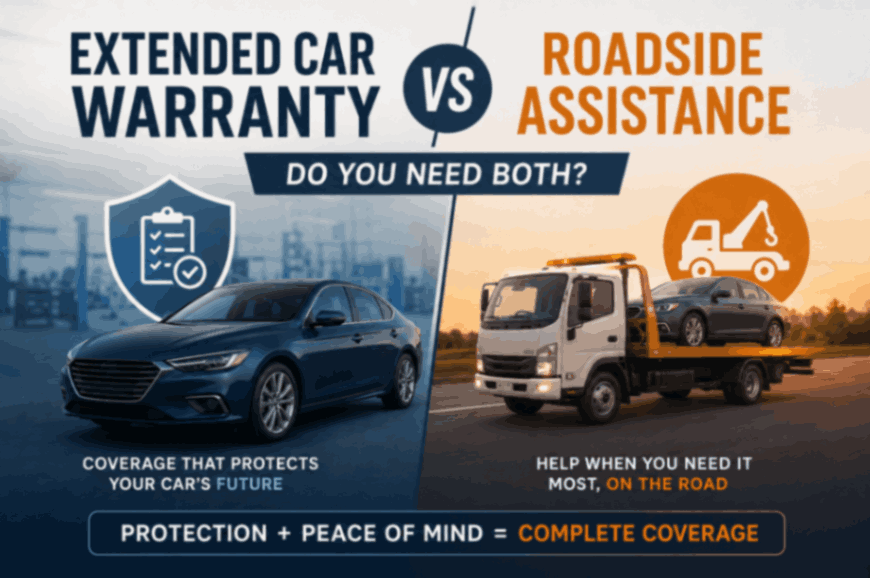
Your car won’t start in a grocery store parking lot. Or the transmission starts slipping two years after the factory warranty ends. These are two very different problems, and they call for two very different types of protection.
Many drivers assume a car warranty with roadside assistance and a standalone emergency roadside service plan are basically the same thing. They’re not. One is designed to help pay for covered repairs. The other is designed to get you unstuck when your vehicle leaves you stranded. Understanding the difference, and whether you actually need both, can help you avoid an expensive surprise the next time something goes wrong.
In this guide, we’ll explain what each type of coverage does, where they overlap and don’t, and how to decide what makes sense for your vehicle and driving habits.
What Is an Extended Car Warranty?
An extended warranty, often called a vehicle service contract, is coverage you purchase to help pay for certain repairs after the manufacturer’s warranty expires. It is a form of vehicle protection focused on mechanical and electrical breakdowns, things like engine, transmission, or electrical component failures, depending on the plan.
This type of coverage is especially common for:
- Drivers looking for an extended warranty for used cars once the original factory coverage has ended
- Owners who plan to keep a vehicle well past the typical factory warranty period
- Anyone who prefers more predictable repair costs instead of facing a large unexpected bill
An extended warranty is not the same as auto insurance. Your car insurance policy, including liability coverage, comprehensive coverage, collision coverage, and uninsured motorist coverage, deals with accidents, theft, weather damage, and liability to others. An extended warranty deals with mechanical breakdowns unrelated to a collision or covered insurance event. They solve different problems, and neither replaces the other.
What a Complete Car Warranty Typically Covers
Coverage varies significantly by provider and plan level, so always review the contract terms carefully. A more comprehensive or “complete car warranty” plan often addresses:
- Engine and transmission components
- Electrical systems
- Air conditioning and heating systems
- Steering and suspension parts
Lower-tier plans may focus mainly on powertrain components, while higher-tier plans aim to cover a broader range of mechanical systems (excluding routine maintenance and normal wear items).
What Is Roadside Assistance?
Roadside assistance is a service plan, not a repair warranty, designed to help when your car becomes temporarily inoperable or you’re stuck in an inconvenient situation. Emergency roadside service plans typically include:
- Towing to a nearby repair shop or destination (within plan limits)
- Jump-starts for a dead battery
- Flat-tire changes
- Lockout assistance
- Fuel delivery if you run out of gas
Roadside assistance does not pay for the repair itself. If your alternator fails, roadside assistance can tow your car to a shop, but it will not cover the cost of the new alternator or the labor. That is where an extended warranty, or your own budget, comes into play.
Extended Warranty vs. Roadside Assistance: Key Differences
| Feature | Extended Car Warranty | Roadside Assistance |
| Primary Purpose | Helps cover cost of covered mechanical repairs | Helps when you are stranded or temporarily stuck |
| Typical Services | Engine, transmission, electrical repairs | Towing, jump-starts, lockouts, flat tires |
| Pays for Parts & Labor | Often yes, subject to contract terms | No |
| Best Suited For | Longer-term mechanical protection | Immediate roadside emergencies |
| Common Availability | Standalone or sometimes bundled with plans | Often available as an insurance policy add-on |
Do You Need Both?
For many drivers, the answer is yes, because these two coverages solve different problems at different moments.
Consider a common scenario: your car breaks down on the highway.
- Roadside assistance gets a tow truck to you and takes the vehicle to a repair shop.
- An extended warranty may then help cover the cost of the actual repair, depending on what failed and whether it is a covered component.
Without roadside assistance, you arrange and pay for the tow yourself. Without an extended warranty, you pay full price for parts and labor once the car reaches the shop. Together, they address both the logistics and the potential repair cost of a breakdown.
When You Might Not Need Both
- If your current auto insurance policy already includes roadside assistance as an add-on, a separate plan may be unnecessary.
- If your vehicle is still under a full manufacturer’s warranty that includes roadside benefits, you may already have both types of protection.
- If you drive a low-mileage vehicle, stay close to home, and have a strong repair budget, you may decide the added cost is not worth it for your situation.
Common Situations Drivers Encounter
| Situation | Likely Coverage Needed |
| Car won’t start due to a dead battery | Roadside assistance (jump-start or tow) |
| Transmission failure after factory warranty ends | Extended warranty (if the component is covered) |
| Flat tire on the interstate | Roadside assistance |
| Check-engine light leads to a major electrical repair | Extended warranty, depending on contract terms |
| Keys locked inside the vehicle | Roadside assistance |
Factors That Can Affect Your Decision
Several practical factors influence whether an extended warranty, roadside assistance, or both make sense:
- Vehicle age and mileage – Higher-mileage or older vehicles are more likely to need mechanical repairs, which is why many people consider an extended warranty for used cars.
- How often you drive long distances – Frequent highway or out-of-town trips increase the chance of needing a tow far from home.
- Your existing insurance policy – Some insurers offer roadside assistance as an inexpensive add-on. Review your current policy before buying a separate plan.
- Your repair budget and risk tolerance – If a sudden repair bill would create financial strain, added protection may provide more peace of mind.
- Overall insurance costs – Adding services to an existing policy can affect your premium, so it helps to compare options carefully.
Coverage details, exclusions, and availability can vary by provider and state. Always review the specific terms that apply to you.
Common Mistakes and Practical Tips
Mistake: Assuming roadside assistance covers repair costs.
It does not. It gets your vehicle to a shop. The repair bill is separate.
Mistake: Assuming every extended warranty includes towing.
Some plans include limited roadside benefits, but many do not. Check the contract.
Mistake: Skipping the exclusions section.
Extended warranties for used cars especially may exclude pre-existing conditions, wear-and-tear items, or failures linked to skipped maintenance.
Mistake: Confusing an extended warranty with car insurance.
An extended warranty does not replace liability coverage, collision coverage, comprehensive coverage, or uninsured motorist coverage. State insurance requirements still apply.
Tip: Before requesting car warranty quotes, write down your vehicle’s age and mileage, your typical driving patterns, and what your current auto insurance policy already includes. This helps you compare plans that actually fit your needs instead of paying for overlapping benefits.
Why Understanding the Difference Matters
Knowing how an extended warranty and roadside assistance differ is not just about terminology. It directly affects how prepared you are for the two most common types of car trouble: getting stranded and needing a repair. Reviewing your current insurance policy and any existing warranty coverage helps you spot gaps before you’re standing on the side of the road trying to figure out what your plan actually covers.
Key Takeaways
- An extended warranty helps cover the cost of certain mechanical repairs after the factory warranty ends.
- Roadside assistance helps when your vehicle leaves you stranded (flat tire, dead battery, lockout, or need for a tow).
- The two products are not interchangeable. Many drivers benefit from having both.
- Coverage details vary significantly by provider, so always read the contract and policy documents carefully.
- Check whether your existing auto insurance policy already includes roadside assistance before buying a separate plan.
- Neither product replaces required auto insurance coverages such as liability, collision, or comprehensive protection.
Need Help Understanding Your Car Insurance Options?
Choosing the right coverage can depend on your vehicle, driving needs, location, and individual circumstances. If you have questions about your policy or want to explore your coverage options, contact our team to discuss your needs.
Frequently Asked Questions
1. Does a car warranty with roadside assistance cost more than a standard warranty?
Plans that bundle roadside assistance with warranty coverage may cost more than a warranty-only plan, but pricing varies by provider, vehicle, and coverage level. Comparing car warranty quotes is the best way to see actual differences.
2. Is roadside assistance the same as towing coverage on my auto insurance?
They are similar but not always identical. Insurance-based roadside assistance is usually an add-on to your policy, while a standalone plan is purchased separately. Tow distance limits and other benefits can differ.
3. Can I still use roadside assistance after my car warranty expires?
If roadside assistance was purchased as a separate plan or through your insurance policy, it generally continues independently of the warranty. If it was bundled only with the warranty, it typically ends when the warranty ends.
4. Do extended warranties cover routine maintenance like oil changes?
Generally no. Extended warranties are designed for unexpected mechanical breakdowns, not scheduled maintenance. Proper maintenance is usually required to keep the warranty valid.
5. Is an extended warranty for used cars worth considering?
It depends on the vehicle’s age, mileage, reliability history, and your budget for unexpected repairs. Reviewing the specific contract terms and comparing them with your vehicle’s likely needs can help you decide.
Conclusion
An extended warranty and roadside assistance are not competing products. They are complementary ones. One helps you manage the cost of a mechanical repair. The other helps you manage the moment your car leaves you stranded. Taking a clear look at your current auto insurance policy, your vehicle’s age and mileage, and your own driving habits will help you decide whether you need one, the other, or both working together.